
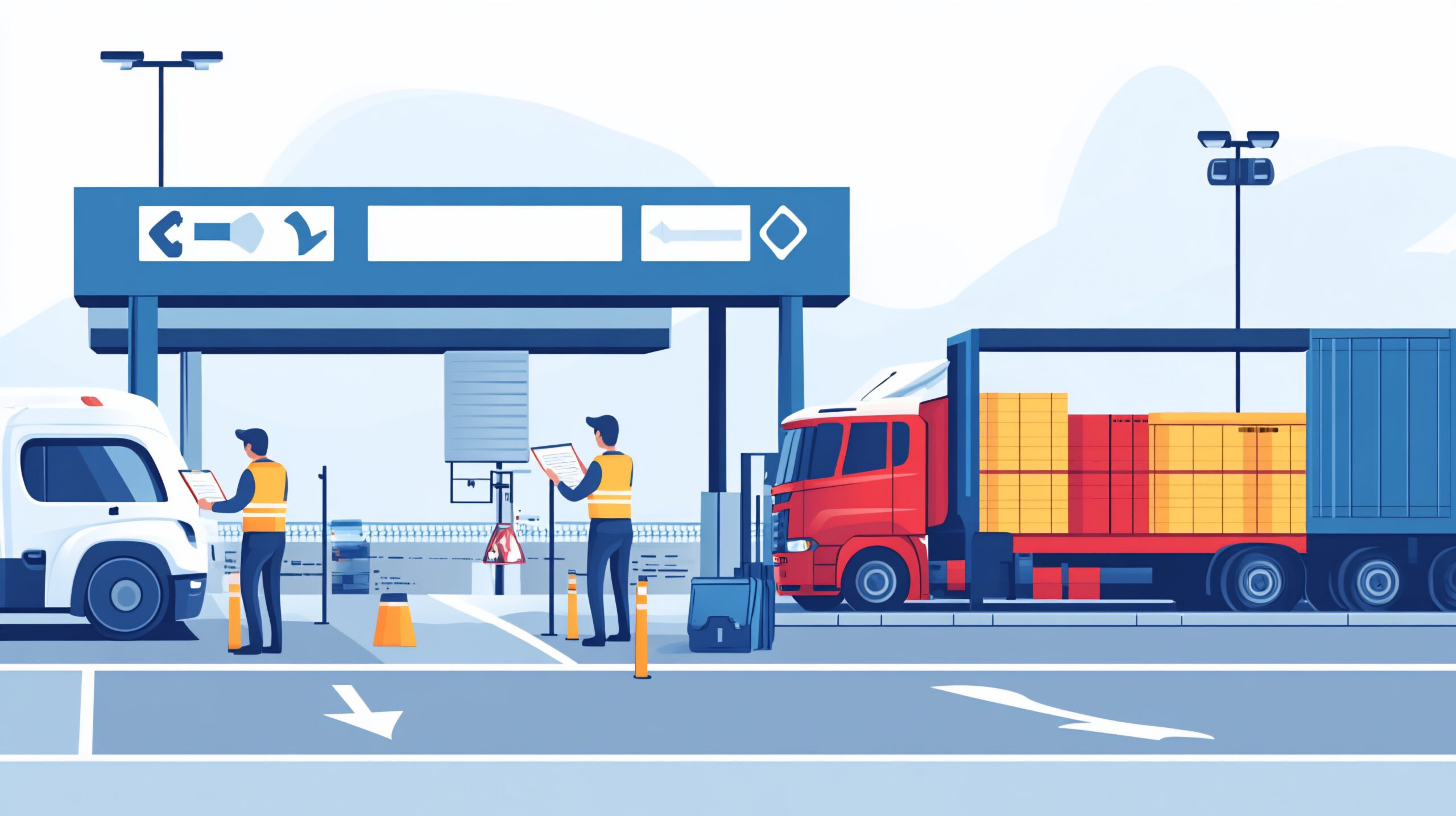
The EU customs security system ICS2 (Import Control System 2)
Starting from April 1, 2025, the road transportation sector, along with the rail sector, will go live into the Import Control System 2 (ICS2), which will become fully mandatory on September 1, 2025. ICS2 has already been applied to other transport sectors, making the road and rail sectors the last ones to join this requirement.
Import Control System 2 (ICS2) is a new electronic customs system designed to enhance the safety and security of goods entering the European Union. Operated by the European Commission’s Directorate-General for Taxation and Customs Union (DG TAXUD), ICS2 requires Economic Operators transporting goods via air, maritime, inland waterways, road, and rail to submit detailed safety and security data before arrival at EU entry points.
During the transitional phase until September 1, 2025, no penalties will be applied, allowing Economic Operators to adapt to the new system.
How ICS2 Works?
Import Control System 2 (ICS2) builds upon the existing Entry Summary Declaration (ENS) system by requiring more detailed and precise shipment information. This data, submitted through the ENS, is electronically communicated to the ICS2 central component, enabling a more targeted risk assessment before goods reach EU borders.
Purpose and Benefits
The primary goal of ICS2 is to strengthen the protection of the EU’s single market and its citizens by improving customs security and risk management. The system introduces advanced safety measures that facilitate better threat detection, improve trade efficiency, and enhance information exchange between economic operators and customs authorities.
Import Control System serves as the next generation of the ENS declaration, requiring:
- Detailed descriptions of goods
- HS codes
- Specific container and seal information
- Transport document numbers (e.g., CMR)
- Precise quantity and nature of goods
- Specific risk analysis data
- EORI (Economic Operators Registration and Identification) number
These additional data requirements allow customs authorities to conduct more effective risk assessments and security checks while ensuring legitimate trade flows smoothly.
Risk Management and Data Sharing
Once the ICS2 central component collects ENS data, it initiates pre-arrival risk analysis and control procedures. The data is then shared with the customs authorities of the relevant EU Member States. These authorities perform their own risk assessments to identify any goods that may pose security threats while ensuring the seamless entry of compliant shipments.
Additionally, ICS2 facilitates collaboration between customs authorities by allowing the exchange of risk analysis results and control measures. This centralization of risk management improves efficiency and enhances overall security monitoring across the EU.
By integrating ICS2 with other customs systems, such as ELO for logistics documentation, the EU is taking a significant step toward modernizing and securing its border management processes. ICS2 will streamline customs procedures, reduce delays, and improve supply chain efficiency while reinforcing the EU’s ability to identify and mitigate potential risks. As the system becomes fully operational, economic operators must prepare for compliance to ensure smooth and secure trade operations within the European market.
As highlighted before, ICS2 is the next generation of the ENS declaration. Essentially, ICS2 builds upon the existing ENS requirements but goes deeper in terms of the level of detail required. While ICS2 follows the main principles of the ENS declaration, it introduces enhanced security and risk analysis capabilities.
Both ENS and ICS2 are part of the EU Customs system. They are submitted within the same system but serve slightly different functions—ENS as a general pre-arrival declaration and ICS2 as a more advanced system for risk analysis and security checks.
Since ICS2 has already been implemented for other transport sectors, the main change taking effect from April 1, 2025, is the inclusion of road and rail sectors into the system. This expansion ensures a harmonized approach to customs security across all modes of transport, reinforcing the EU’s commitment to secure and efficient trade operations.